
Used in more than 10 million macro calculations since 2012
Lorem ipsum dolor sit amet, consectetuer adipiscing elit. Aenean commodo ligula eget dolor. Aenean massa. Cum sociis natoque penatibus et magnis dis parturient montes, nascetur ridiculus mus. Donec quam felis, ultricies nec, pellentesque eu, pretium quis, sem. Nulla consequat massa quis enim.



The IIFYM Macro Calculator has been used in more than 10 million macro calculations since its launch in 2012.
It was created to give people a practical starting point for calories and macronutrients without forcing everyone into the same fixed macro percentages.
To get your personalized results, use the calculator above and enter the information requested about your body, activity, daily movement, and goal.
The calculator generates estimated calorie and macro starting targets for cutting, maintenance, and muscle gain. These numbers are intended as a starting point, not a medical prescription or guarantee of a specific outcome.
The sections below explain how the calculations work, how the IIFYM approach differs from traditional BMR/TDEE calculators, and how to use your targets in a realistic way.
If you’re confused about using AI tools for macro calculations, see our article on using ChatGPT to calculate macros and what to avoid.
Macros, short for macronutrients, are the nutrients your body requires in the largest amounts. They shape your calorie intake, metabolic rate, muscle growth, energy levels, appetite control, hormonal balance, recovery, and body composition. Understanding macros is the foundation of successful nutrition for fat loss, muscle gain, body recomposition, and long term health.

As Dr. Joe Klemczewski explains in our interview, evidence-based protein strategies are essential for bodybuilding and long-term body composition. His research shows how protein influences metabolism, appetite regulation, and sustainable fat loss.

Carbs provide glucose, the body’s preferred energy source. They support daily energy, workout performance, brain function, digestion, and hormonal balance. Carbohydrates increase metabolic output and help you burn more fat when consumed at levels appropriate to your activity level. Carbs do not cause weight gain; consuming too many calories does.
As Dr. Layne Norton discusses in our interview, carbohydrate intake directly influences performance, thermic effect of food (TEF), and satiety – especially when fiber intake is optimized.

Dietary fat supports hormone production, brain function, vitamin absorption, blood pressure regulation, and nervous system health. The proper fat intake keeps your body functioning optimally while helping your diet remain enjoyable and sustainable.
As IFBB Pro and Certified Nutrition Specialist Brandan Fokken explains in our interview, his body responds well to fats – which is why he implements healthy fats strategically in both his own prep and his clients’ nutrition plans.
His approach focuses on building metabolic capacity first, then making gradual adjustments rather than cutting everything out at once.
If you have elevated cholesterol, the quality of the foods used to meet your macro targets may matter as much as the total grams. In general, dietary patterns that emphasize unsaturated fats, fiber-rich foods, vegetables, fruits, legumes, whole grains, nuts, seeds, and fish are commonly recommended as part of heart-healthy eating.
Your calculator result is not medical nutrition therapy. If you have high cholesterol or take cholesterol-lowering medication, review significant dietary changes with your physician or a registered dietitian.
High triglycerides can be influenced by overall calorie intake, added sugars and refined carbohydrates, alcohol intake, body weight, physical activity, medications, and underlying health conditions.
For many people, reducing added sugars and highly refined carbohydrates, increasing nutrient-dense foods, staying physically active, and reaching or maintaining an appropriate body weight can be part of a triglyceride-lowering plan.
Omega-3 fatty acids can lower triglycerides, but therapeutic doses used to treat elevated triglycerides may involve prescription products and clinician supervision. Do not use this calculator as a substitute for treatment recommendations from your healthcare provider.
Important: If you have high cholesterol, high triglycerides, diabetes, kidney disease, thyroid disease, cardiovascular disease, or another metabolic or chronic condition, work with your healthcare provider or a registered dietitian for individualized guidance.
The macro calculator provides general educational estimates. It does not diagnose, treat, or prevent disease, and it is not a substitute for individualized medical advice.
Two of the most common questions in macro tracking: “Do I need to track fiber?” and “Can I eat sugar?” Short answer: yes to both.

Fiber is often overlooked, but it plays a critical role in fat loss success. It increases satiety between meals, supports healthy digestion, regulates blood sugar, and is linked to reduced cardiovascular risk. We recommend 14 grams per 1,000 calories – aligning with the Dietary Guidelines for Americans. At 2,000 calories, that’s approximately 28 grams daily.
While technically a carbohydrate, fiber behaves differently in the body. It’s not fully digested, so it contributes fewer usable calories. That’s why we track it separately.
When I was building the calculator, I reached out to my old coach Dr. Layne Norton (PhD in Nutritional Sciences) to get his take on the fiber recommendations. His response: “That’s pretty damned good.” I was super excited about this and still appreciate his validation.
Full disclosure: Layne was still completing his PhD in Nutritional Sciences when he coached me. He has since earned his doctorate and become one of the most respected voices in evidence-based nutrition – but I knew he was the real deal long before the credentials made it official.
Over the years we’ve refined the fiber allotment feature based on user feedback and emerging research, but the core methodology he validated has remained the foundation of how our macro calculator handles fiber today.

Sugar doesn’t make you fat. Eating too many calories does.
This is one of the most misunderstood aspects of nutrition. Sugar is just a carbohydrate, and like all carbs, it contains 4 calories per gram. The problem isn’t sugar itself; it’s that sugary foods are easy to overeat, which leads to a calorie surplus. For most healthy people, the sugar argument is not only irrelevant, but it’s totally dead.
You’ve probably heard that sugar spikes insulin, and insulin stops fat burning. While technically true in isolation, this isn’t how real meals work. When you eat sugar alongside fiber, fat, and protein – like you do in a balanced diet, the insulin response is significantly blunted. Fiber slows digestion, fat delays gastric emptying, and protein moderates the blood sugar curve. The result is a gradual rise and fall rather than a sharp spike.
This matters for fat loss because lipolysis (your body’s ability to break down stored fat) isn’t shut off by moderate, mixed-meal insulin responses. It’s the overall calorie balance across the day that determines whether you lose fat – not whether you had some sugar with breakfast.
For those concerned about blood sugar management or conditions like insulin resistance or type 2 diabetes, the same principle applies: context matters. Sugar consumed within a balanced macro framework behaves very differently than sugar eaten alone on an empty stomach. That said, if you have diabetes or a metabolic condition, always work with your healthcare provider to determine what’s right for you.
In our follow-up conversation about flexible dieting, Layne put it simply: “I don’t have cheat meals. I always eat mindfully and if I want something I have it and just fit it into my macros.” That’s the IIFYM approach – no food is off-limits as long as it fits your daily targets.
The key is balance. Get your protein, hit your fiber target, and fill the rest with carbs and fats you enjoy, including some sugar if you want it.
The following percentages show how your total calories can be distributed across protein, carbs, and fats depending on your fitness goal. Remember, ratios are less than ideal and should only be used as guide. These are general starting points – your individual needs may vary based on body composition, activity level, lifestyle, and how your body responds.
| Goal | Protein | Carbs | Fats |
|---|---|---|---|
| Cutting (Weight Loss) | 35% – 40% | 30% – 40% | 20% – 30% |
| Recomposition / Maintenance | 30% | 40% | 30% |
| Bulking (Muscle Gain) | 25% – 30% | 40% – 50% | 20% – 30% |
| Athletic / Performance | 20% – 25% | 50% – 60% | 20% – 25% |
Note: These ranges are guidelines, not rigid formulas. Your actual percentages will vary based on individual needs and may vary when totalling 100%.
BMR, or Basal Metabolic Rate, is an estimate of the calories your body uses at rest to support basic functions such as breathing, circulation, temperature regulation and organ function.
Common BMR calculators use equations such as the Mifflin-St Jeor equation, Katch-McArdle formula and Harris-Benedict equation. These are useful reference models, but the IIFYM Macro Calculator does not rely on a single BMR equation to determine your final macro targets. We explain the math and the difference below.
EAT accounts for calories burned during workouts such as weightlifting, cardio, sports, and high-intensity training. The frequency, intensity, and duration of your training sessions influence your calorie burn. Our calculator adjusts accordingly.
The thermic effect of food (TEF) is the energy your body uses to digest, absorb, and process what you eat. Every time you eat, a portion of those calories is burned off just turning food into usable fuel. For most people, TEF accounts for roughly 10% of total daily energy expenditure.
Not all macros have the same thermic effect. Protein has the highest TEF, which is one of the reasons high-protein diets are so effective for fat loss and muscle retention:
That means 100 calories of protein might leave you with only 70–80 usable calories after digestion, while 100 calories of fat is much closer to 100 usable calories. Hitting an appropriate protein target doesn’t just support muscle, it slightly increases how many calories you burn each day.
The IIFYM Macro Calculator takes TEF into account by prioritizing adequate protein and fiber within your total calorie target. Instead of pushing you toward extreme starvation numbers, it helps you land on a smart, sustainable intake that supports fat loss, preserves lean mass, and works with your metabolism rather than against it. If you have any medical conditions that affect digestion or metabolism, be sure to discuss your targets with your healthcare provider before making major changes.
Total Daily Energy Expenditure (TDEE) is the total energy you use across a day. A useful way to understand it is BMR + NEAT + EAT + TEF.
Many traditional TDEE calculators estimate this by multiplying BMR by a general activity factor. That is a useful shortcut, but it can hide meaningful differences in daily movement, exercise and step count.
NEAT refers to the calories burned through everyday movement outside of intentional exercise, including walking, standing, cleaning, working, and even fidgeting. NEAT varies widely between individuals, which is why two people of the same bodyweight can have dramatically different calorie needs.
Your Basal Metabolic Rate (BMR) is an estimate of how many calories your body would burn in 24 hours at complete rest. It does not include walking, working, exercising or most other daily activity.
Online BMR calculators cannot directly measure metabolism. They estimate it with mathematical equations developed from population data. Three of the most common are Mifflin-St Jeor, Katch-McArdle and Harris-Benedict.
The Mifflin-St Jeor equation estimates BMR using weight, height, age and sex. Weight is entered in kilograms and height in centimeters.
Men:BMR = (10 × weight in kg) + (6.25 × height in cm) - (5 × age) + 5
Women:BMR = (10 × weight in kg) + (6.25 × height in cm) - (5 × age) - 161
Example: a 40-year-old man who weighs 180 lb and is 5’10” is approximately 81.6 kg and 177.8 cm.
BMR = (10 × 81.6) + (6.25 × 177.8) - (5 × 40) + 5
BMR ≈ 1,732 calories per day
The Katch-McArdle formula estimates BMR from lean body mass rather than age, height and sex.
BMR = 370 + (21.6 × lean body mass in kg)
Using the same 180 lb person at an accurately measured 18% body fat:
81.6 kg × 0.82 = approximately 66.9 kg lean body mass
BMR = 370 + (21.6 × 66.9)
BMR ≈ 1,815 calories per day
Katch-McArdle can be useful when reliable body-fat data is available. If the body-fat estimate is inaccurate, the BMR estimate built from it can also be inaccurate.
The revised Harris-Benedict equation is another established method for estimating basal energy expenditure.
Men:BMR = 88.362 + (13.397 × weight in kg) + (4.799 × height in cm) - (5.677 × age)
Women:BMR = 447.593 + (9.247 × weight in kg) + (3.098 × height in cm) - (4.330 × age)
For the same 40-year-old, 180 lb, 5’10” man:
BMR ≈ 1,808 calories per day
| Formula | Uses | Common use |
|---|---|---|
| Mifflin-St Jeor | Weight, height, age, sex | General BMR estimation |
| Katch-McArdle | Lean body mass | When reliable body-fat data is available |
| Revised Harris-Benedict | Weight, height, age, sex | Established alternative estimate |
The same person can receive a different BMR estimate from each equation. None directly measures metabolism. Each is a mathematical estimate.
Your Total Daily Energy Expenditure (TDEE) includes resting metabolism plus the energy you use through movement, exercise and digestion.
TDEE ≈ BMR + NEAT + EAT + TEF
NEAT – Non-Exercise Activity Thermogenesis: everyday movement outside intentional exercise, including walking, standing, cleaning, working and fidgeting.
EAT – Exercise Activity Thermogenesis: calories used during intentional exercise such as weight training, cardio, sports and conditioning.
TEF – Thermic Effect of Food: energy used to digest, absorb and process the food you eat.
Many TDEE calculators estimate these components indirectly by multiplying BMR by a general activity factor:
Estimated TDEE = BMR × Activity Multiplier
For example, if a person’s estimated BMR is 1,700 calories and the calculator assigns an activity factor of 1.5:
1,700 × 1.5 = 2,550 estimated calories per day
This is simple and useful, but two people can both select “moderately active” while one averages 4,000 steps per day and another averages 10,000. Their real daily movement can be very different.
The IIFYM Macro Calculator does not simply choose one BMR formula, multiply it by a generic activity factor and divide the result into fixed macro percentages.
Our proprietary model uses several inputs together to create practical starting targets, including:
For higher body weights, the calculator also moderates how additional body weight contributes to the calorie estimate rather than allowing estimated calorie needs to rise indefinitely in a straight line.
Daily steps are considered separately from the activity category, helping distinguish between people who may choose the same activity label but move very different amounts throughout the day.
We do not use a fixed macro percentage such as 40/30/30 or 40/40/20.
Instead, protein and fat are established first. Protein is based primarily on goal weight, sex and activity level. Fat is also based on goal weight and activity level, with minimum and maximum guardrails built into the calculation. Carbohydrates then receive the calories remaining.
Total Calories = (Protein × 4) + (Carbohydrates × 4) + (Fat × 9)
Carbohydrate grams = [Total calories - (protein grams × 4) - (fat grams × 9)] ÷ 4
If you want the deeper explanation for why we do not use fixed percentage splits, read why traditional macro ratios don’t work.
The calculator provides separate starting targets for fat loss, maintenance and muscle gain. These are practical starting points generated from the same IIFYM framework rather than three unrelated diets.
There is no single online formula that can know exactly how many calories you burn. Mifflin-St Jeor, Katch-McArdle, Harris-Benedict, traditional TDEE activity multipliers and the IIFYM model are all estimates.
The best calculator gives you a reasonable starting point. Your body-weight trend, measurements, hunger, energy, training performance, recovery and consistency tell you what happens next.
Use the calculated macros consistently, monitor your real-world results and adjust when the data tells you to.
35-year-old female, 150 lbs, moderately active
⬇️
1,675 calories | 130g protein | 165g carbs | 55g fat | 24g fiber
This is an example starting target. Actual weight-loss rate, hunger, energy, and training performance can vary, so results should be monitored and adjusted over time.
28-year-old athletic male, 180 lbs, very active
⬇️
2,845 calories | 180g protein | 340g carbs | 85g fat | 42g fiber
This controlled calorie surplus provides enough extra energy and protein to support steady muscle growth and strength gains without excessive fat gain.
45-year-old female, 140 lbs, lightly active
⬇️
1,742 calories | 115g protein | 190g carbs | 58g fat | fiber 25 fiber
These maintenance macros are set around this person’s TDEE to help stabilize body weight, support daily performance, and maintain current body composition.
Your activity level plays a significant role in your daily calorie needs. Selecting the wrong category is one of the most common mistakes in macro tracking, which can lead to overeating or eating too few calories.
Sedentary individuals have minimal daily movement and do not engage in structured exercise. Light activity includes one to three workouts per week or a low daily step count. Moderate activity includes four or five weekly workouts combined with regular movement. Very active lifestyles involve intense training, physically demanding jobs, or high daily step counts. High-performance athletes often train multiple times per day or engage in highly strenuous physical routines.
Choosing the correct activity level ensures your calorie intake accurately reflects your lifestyle.


Building muscle requires a calorie surplus, a controlled increase in energy intake above your TDEE. However, consuming too many calories leads to unnecessary fat gain. Our calculator recommends a moderate 5 to 10% surplus that supports muscle growth and strength improvements while minimizing fat accumulation.
Protein intake is increased to promote repair and growth, carbohydrates provide fuel for training and recovery, and healthy fats support hormone function. This method promotes clean, efficient muscle gain rather than the excessive bulking associated with outdated bodybuilding methods.

If your goal is to maintain your current weight, the calculator sets your macros to match your TDEE exactly. This creates stable energy levels, balanced nutrient intake, strong training performance, and healthy body composition without requiring any form of dieting. Maintenance macros are ideal after a fat loss phase, during metabolic healing, or when building long-term lifestyle habits.
Many macro calculators use fixed percentage splits because they are simple to understand and easy to apply. Common examples include:
These patterns are common, but they are not automatically appropriate for every person. When total calories change, a fixed percentage split forces protein and fat to rise or fall with calories even when the person’s actual needs may not have changed.
The IIFYM calculator takes a different approach. Protein is based primarily on goal weight, sex and activity level. Fat is based on goal weight and activity level with minimum and maximum guardrails. Carbohydrates then fill the calories remaining.
This allows the macro targets to change with the individual instead of forcing everyone into the same percentage split.
Body recomposition is the process of reducing fat and increasing muscle simultaneously. While this requires attention to nutrition and training, it is entirely achievable with the correct macro targets, a moderate calorie intake, sufficient protein, consistent resistance training, quality sleep, and accurate macro tracking.
Over time, individuals see improved muscle definition, smaller waist measurements, increased strength, and healthier body composition, even if the scale changes slowly. Recomposition rewards consistency and creates long-lasting physical change.

Once you know your daily macro targets, you can divide them into meals in a way that suits your lifestyle. Some people prefer two or three larger meals because it feels flexible and straightforward. Others benefit from four to six meals for improved performance and recovery.
In general, eating protein every four to six hours helps support muscle protein synthesis. Consuming carbohydrates around workouts enhances energy and strength. Spreading healthy fats throughout the day helps control hunger and support hormone function. Including vegetables, whole grains, fiber, and micronutrient-rich foods further improves digestion, energy levels, and metabolic health.
Tracking macros gives you a deeper understanding of how your body responds to food. It helps you manage portion sizes, reduce processed foods, stabilize daily energy, and improve metabolic health. Macro tracking also supports realistic eating habits without restrictions or food guilt. People who track macros tend to see improvements in weight loss, muscle gain, strength, athletic performance, body composition, and long-term health.
Because macro tracking allows flexibility, it is sustainable for most lifestyles and helps people maintain results after reaching their goals.
Not all bodies respond the same way to a calorie deficit – and ignoring metabolic adaptation can be dangerous.
As IFPA Pro and Diet Doc Licensed Clinician Tyler Mayer explains in our interview, he’s witnessed firsthand what happens when calorie restriction goes too far. One client came to him eating just 700 calories a day while doing 2-3 hours of cardio – for two years straight. Despite the extreme deficit, she couldn’t lose weight because her metabolism had downregulated so severely.
His solution wasn’t to cut more. It was to rebuild. Over two years of careful reverse dieting, she regained metabolic function and now eats nearly triple her original intake while maintaining a leaner physique.
“Many clients who come to me with existing low intakes and express a desire to prep for a show are often turned down,” Tyler notes. “We go through a process of reevaluating wants, desires, and dreams versus the absolute need for HEALTH.”
That’s why this calculator doesn’t just spit out the lowest number possible. A sustainable deficit preserves your metabolism, your muscle mass, and your sanity.
Once you receive your personalized macro plan, save your numbers in a macro tracking app or your phone’s notes. Track your meals daily and follow your macro targets consistently for at least two to three weeks before making adjustments. Recalculate your macros when your bodyweight changes, your training intensity increases, or your goals shift.
Focus primarily on whole, nutrient-dense foods while leaving room for moderation and flexibility. This balanced approach prevents burnout and creates healthier long-term habits. Macro-based nutrition is not a fad, it is a science-backed, sustainable way to eat for life.
Using the calculator above, you now have everything you need to begin a personalized fitness and nutrition plan. You receive your daily calories, accurate protein, carbohydrate, and fat targets, the correct deficit or surplus for your goals, and a sustainable macro ratio tailored to your activity level.
All that’s left is to track your macros consistently and follow your plan. Whether your goal is fat loss, muscle gain, better body composition, or maintaining your current weight, your transformation begins the moment you take action.
Client-reported experiences. Individual results vary based on starting point, adherence, activity, health history, and other factors.
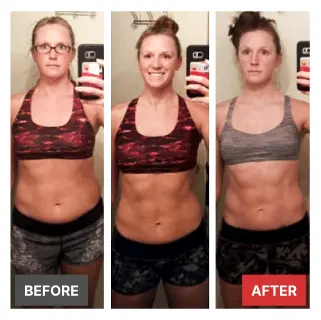
32 y/o
IIFYM has been a game-changer for me! I've lost 20 lbs while enjoying my favorite treats. Thanks to this flexible approach, I've found a sustainable way to maintain my progress.
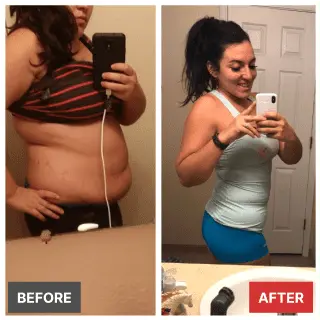
41 y/o
IIFYM's Macro Blueprint transformed my diet. I've lost 15 pounds and feel amazing! It's the most personalized program I've ever tried.
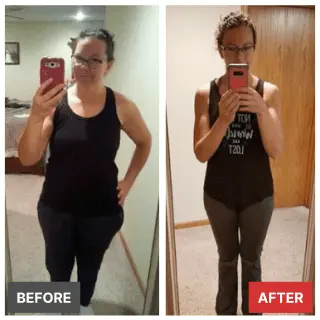
29 y/o
IIFYM made me realize that healthy eating doesn't have to be boring. It's been a delicious journey, and I've never felt better! 🥦🍔🍰

41 y/o
The 16-Week Deadline Diet helped me reach my goals. The support and coaching are incredible—I can't recommend it enough!

41 y/o
IIFYM is the secret behind my transformation! I've achieved my weight loss goals while indulging in my guilty pleasures. Don't count the days; make the days count!

32 y/o
I never thought losing weight could be this easy. The personalized macros have made all the difference for me. Thank you, IIFYM!

32 y/o
IIFYM is the ultimate tool in my fitness toolbox! I've reached my dream physique without restrictions. This approach has shown me that food is fuel.

45 y/o
IIFYM turned my fitness journey around. With the help of a personalized macro plan, I've packed on muscle and lost fat. It's all about the numbers and the gains!

41 y/o
I used to struggle with portion control until I discovered IIFYM. It's taught me how to balance my macros, and I've lost fat while keeping my muscle.
Last Updated: December 2nd 2025 | Reviewed & Approved By A Registered Dietitian
The IIFYM Macro Calculator uses a proprietary model rather than calculating your final macro targets from one BMR equation.
It considers your current body weight, goal weight, sex, activity level and typical daily steps. Protein and fat are established first, then carbohydrates receive the calories remaining.
The calculator provides separate starting targets for cutting, maintenance and muscle gain. Treat these as informed starting points and adjust based on your real-world progress.
There is no single best macro ratio that works for everyone. Fixed splits such as 40/40/20 or 40/30/30 can look precise while ignoring the amount of protein and fat an individual actually needs.
The IIFYM calculator uses a protein-and-fat-first approach based primarily on goal weight, sex and activity level. Carbohydrates fill the remaining calories.
Protein needs vary with body size, activity and goals. The IIFYM calculator does not set protein as a fixed percentage of total calories.
Instead, your protein target is based primarily on goal weight, sex and activity level. This helps prevent protein from automatically rising simply because current body weight or total calorie intake is higher.
Protein targets are still estimates. Training volume, body composition, recovery and medical considerations may justify individual adjustments.
The IIFYM Macro Calculator uses a proprietary IIFYM calculation model for its final macro targets.
Standard metabolic equations such as Mifflin-St Jeor, Katch-McArdle and Harris-Benedict are useful ways to estimate BMR, and we explain the formulas in the methodology section above. However, the live IIFYM macro engine does not simply select one of those equations and use it as the sole basis for your macros.
Our model uses current weight, goal weight, sex, activity level and daily steps, then establishes protein and fat before assigning the remaining calories to carbohydrates.
No online macro calculator can directly measure your true metabolism or guarantee an exact calorie requirement.
The IIFYM calculator is designed to provide a practical starting point based on the information you enter. Factors such as genetics, sleep, stress, medications, health conditions, dieting history and the accuracy of your activity estimate can all affect real-world energy needs.
Use your results consistently, watch your weight and performance trends, and adjust based on what actually happens rather than treating any calculator result as a permanent prescription.
The current IIFYM Macro Calculator does not require body-fat percentage to generate your core macro targets.
Body-fat percentage is important in some metabolic formulas, especially Katch-McArdle, because that equation estimates BMR from lean body mass. We explain that method above for comparison and education.
If you have reliable body-composition data, it can still be useful for tracking progress, but the live IIFYM macro calculation is built primarily from current weight, goal weight, sex, activity level and daily steps.
No. Consistency matters more than perfection.
Aim to hit each macro target within 5 to 10 grams on most days. If you finish the day slightly over on carbs and under on fat, that is completely acceptable. What matters most is your average intake over the week, not any single day.
As Dr. Layne Norton has emphasized in our follow-up interview, dietary adherence, the ability to stick with a nutrition approach long term is the strongest predictor of success. Rigid, all-or-nothing thinking leads to frustration, binge cycles, and quitting.
Practical guidelines:
If you have a day where you significantly overshoot (a social event, holiday, or travel), do not try to compensate by drastically undereating the next day. Simply return to your normal targets and continue forward.
[Sources: Del Corral P et al., International Journal of Behavioral Nutrition and Physical Activity, 2011]
Recalculate your macros in the following situations:
After significant weight change Every 10 to 15 pounds lost warrants a recalculation. As your body gets smaller, your metabolic rate decreases and you need fewer calories to maintain a deficit.
When you hit a plateau If you have been consistent with your macros and weight loss has stalled for more than three weeks, it is time to recalculate. A true plateau (not just normal fluctuation) usually requires either a macro adjustment or a brief diet break.
When your activity level changes significantly Starting a new training program, changing jobs from sedentary to active, or recovering from an injury all warrant recalculation.
General guideline Even without a plateau or major weight change, recalculating every four to six weeks helps ensure your targets remain appropriate as your body adapts.
When recalculating, make conservative adjustments. Dropping calories by more than 200 to 300 per day at once can increase hunger, reduce energy, and lead to muscle loss.
Activity level selection is the most common source of calculator error. Most people overestimate their activity, leading to inflated calorie targets and slower fat loss.
Use these guidelines:
Sedentary Desk job with little to no intentional exercise. Most of your day is spent sitting.
Lightly Active Desk job plus light exercise one to three days per week, or a job that involves some walking.
Moderately Active Moderate exercise three to five days per week, or a job that requires standing and movement throughout the day.
Very Active Hard exercise six to seven days per week, or a physically demanding job combined with regular training.
Extremely Active Professional athlete, physical laborer with daily intense training, or multiple training sessions per day.
When in doubt, choose one level lower than you think. It is easier to add calories later if you are losing weight too quickly than to troubleshoot a plateau caused by overeating.
Also note that your intentional exercise contributes less to daily calorie burn than you might expect. Non-exercise activity (walking, standing, fidgeting) often accounts for more daily energy expenditure than your gym session.
This calculator provides general nutrition estimates for generally healthy adults. You should consult a healthcare provider or registered dietitian before making significant dietary changes if:
If you experience concerning symptoms after changing your diet, stop and speak with a healthcare professional.
Macro tracking can be useful for some people, but it is not appropriate for everyone. If tracking negatively affects your relationship with food, consider working with a registered dietitian or another qualified healthcare professional.
This calculator is for educational and informational purposes only. It is not intended to diagnose, treat, cure, or prevent any disease or health condition.
Fiber is often overlooked in macro tracking, but it plays an important role in fat loss success.
Benefits of adequate fiber intake:
We recommend 14 grams of fiber per 1,000 calories consumed, which aligns with Dietary Guidelines for Americans. For someone eating 2,000 calories, that means approximately 28 grams of fiber daily.
While fiber is technically a carbohydrate, we track it separately because it behaves differently in the body. Fiber is not fully digested and absorbed, so it contributes fewer usable calories than other carbs. Tracking fiber ensures you are getting enough regardless of your carb target.
When I was building the calculator, I reached out to my old coach Dr. Layne Norton (PhD in Nutritional Sciences) to get his take on the fiber component. His response: “That’s pretty damned good.” Good enough for me.
Good sources include vegetables, fruits, legumes, whole grains, and seeds.
[Source: U.S. Dietary Guidelines for Americans, 2020-2025]
This macro calculator was created by Anthony Collova, founder of IIFYM.com, and launched in 2012.
Since its launch, the calculator has been refined through multiple versions using user feedback, practical coaching experience, and updates in nutrition research.
The current version is reviewed by Dr. Ioannis Nikitidis, MD, RD and Justina Serwaah Owusu, RDN. Their review does not make the calculator a substitute for individualized medical or nutrition care.
For questions about the methodology or to provide feedback, contact us at [email protected].
Great question!
The National Academy of Medicine gives the following daily fiber recommendations for adults:
Source link: Mayo Clinic Fiber Suggestion